The Museu Casa da Moeda (Portugue Mint Museum) will tell you the history of Portugal based on a selection of coins minted in the country between the 12th century and our day. It is a thematic exhibition that shows the public an exclusive selection of gold coins representing each century of national history. There are a total of 10 coins that tell the story of the first “Portuguese millennium”, from the Morabitino of D. Sancho I to the euro of the Portuguese Republic.
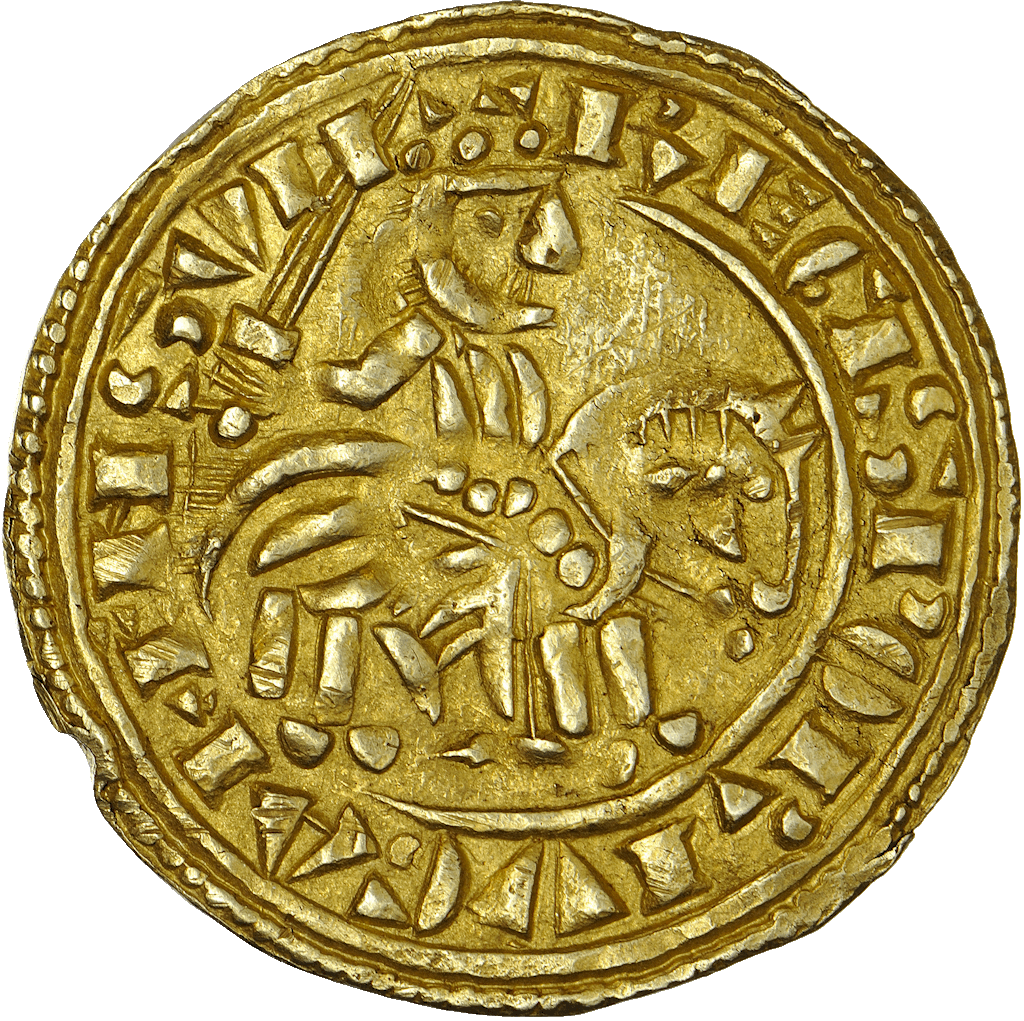
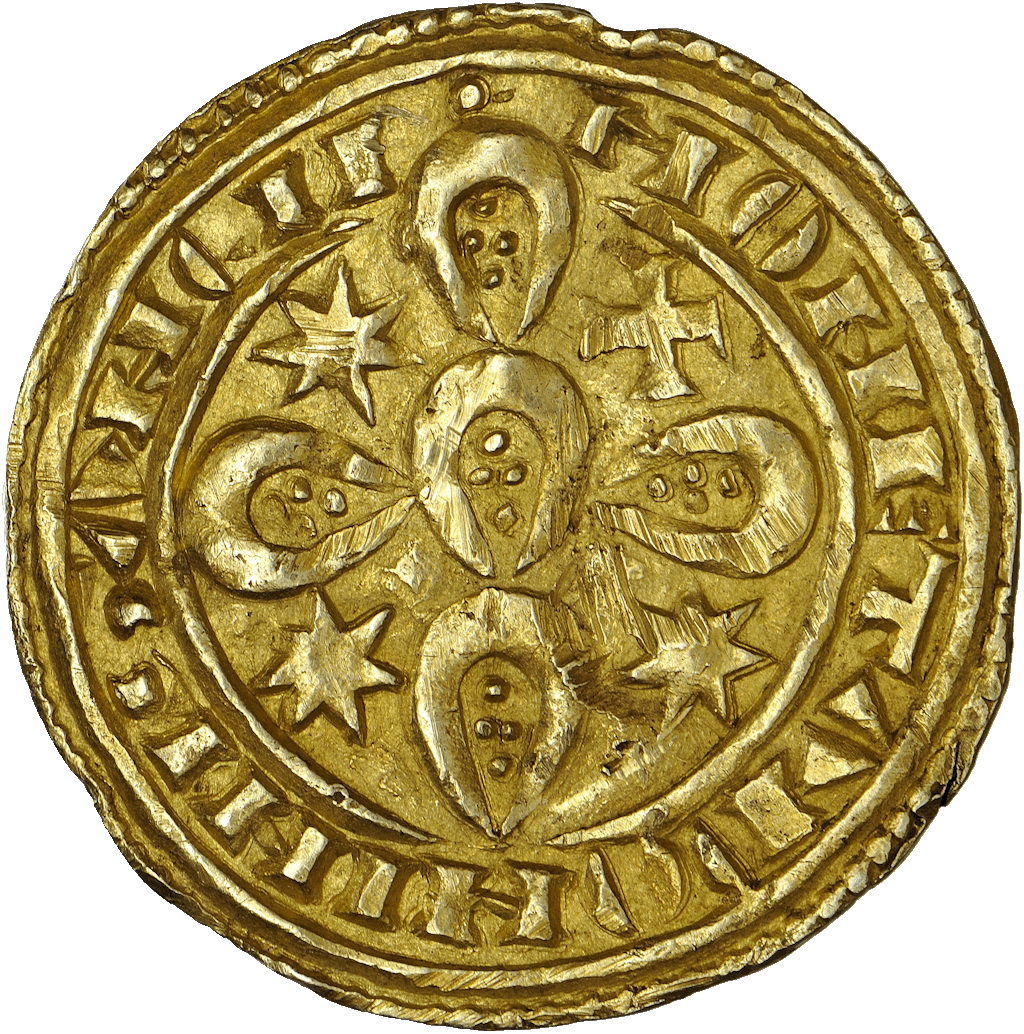
Armed a knight by his father after the Badajoz misfortune, D. Sancho I sought to consolidate the border with Galicia, in the north, and continue the war with Islam, in the south, having managed to conquer the city of Silves, one of the bastions of the Almohad presence in Gharb al-Andalus, with the support of a fleet that was heading for the eastern crusade. Sealed the alliance with Aragon and Rome, D. Sancho I dedicated his attention to the organization of the settlement and the territory, founding cities like Guarda or granting charters to those already in existence, especially in Beira and Trás-os-Montes. The currency that marks his reign, the Morabitino, the first gold coin minted in Portugal, presents all the characteristics of a piece produced for a Christian monarchy, despite its name being of Arab origin.
In the 13th century, D. Sancho II continued the policy of issuing gold that had been developed by his father, D. Afonso II, and ordered the minting of a new Morabitino, a currency that had been circulating in the coffers of the kingdom since the end of the 12th century. Like the previous one, this coin was struck at an important moment in the history of Portugal, marked, on the one hand, by the war with Islam, in which the Order of Santiago stood out; on the other, for the conflicts with the clergy, in particular the archbishop of Braga and the bishops of Lisbon and Porto; finally, by the civil war that opposed the king to the younger brother, D. Afonso, which would end with his own deposition.
The crisis that crossed Europe during the 14th century, of which the black plague was perhaps the most striking episode, was also felt in Portugal. D. Fernando's reign was very turbulent: wars were fought over the Castile throne and some popular sectors reacted negatively to the king's marriage to D. Leonor Teles de Meneses. Restored social peace, D. Fernando devoted some attention to the administration of the kingdom: he ordered the construction or repair of several castles and walls, as in Lisbon and Porto; enacted the sesmarias law, with which it sought to promote agriculture; it extended commercial networks abroad and promoted the development of the navy.
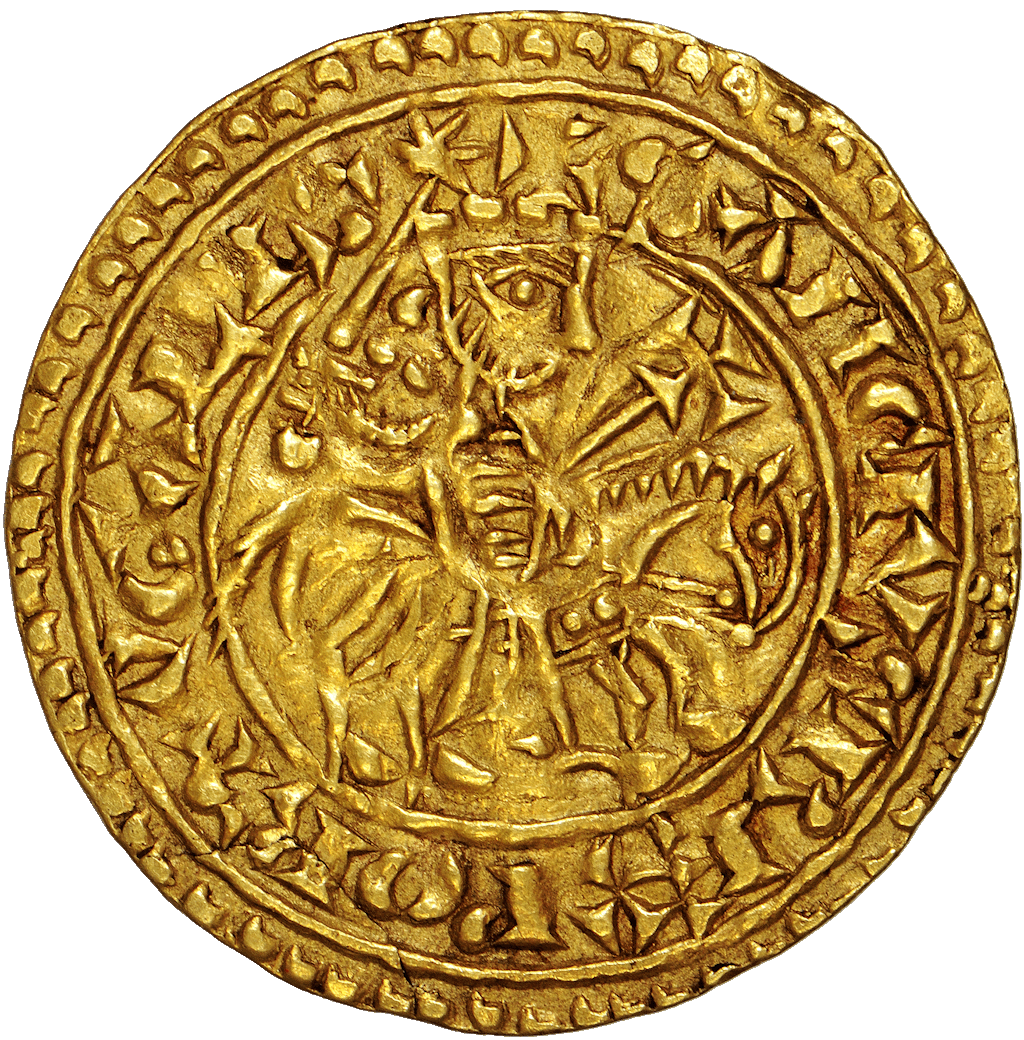
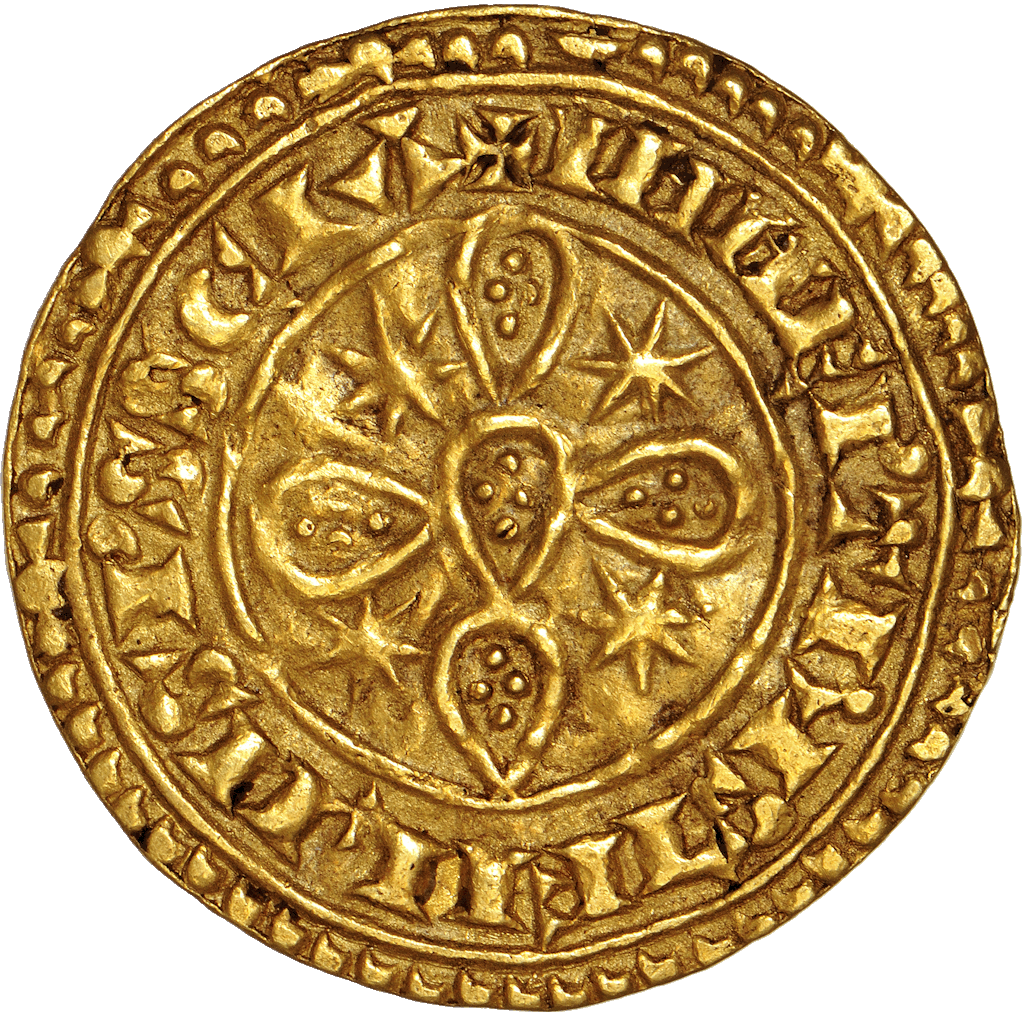
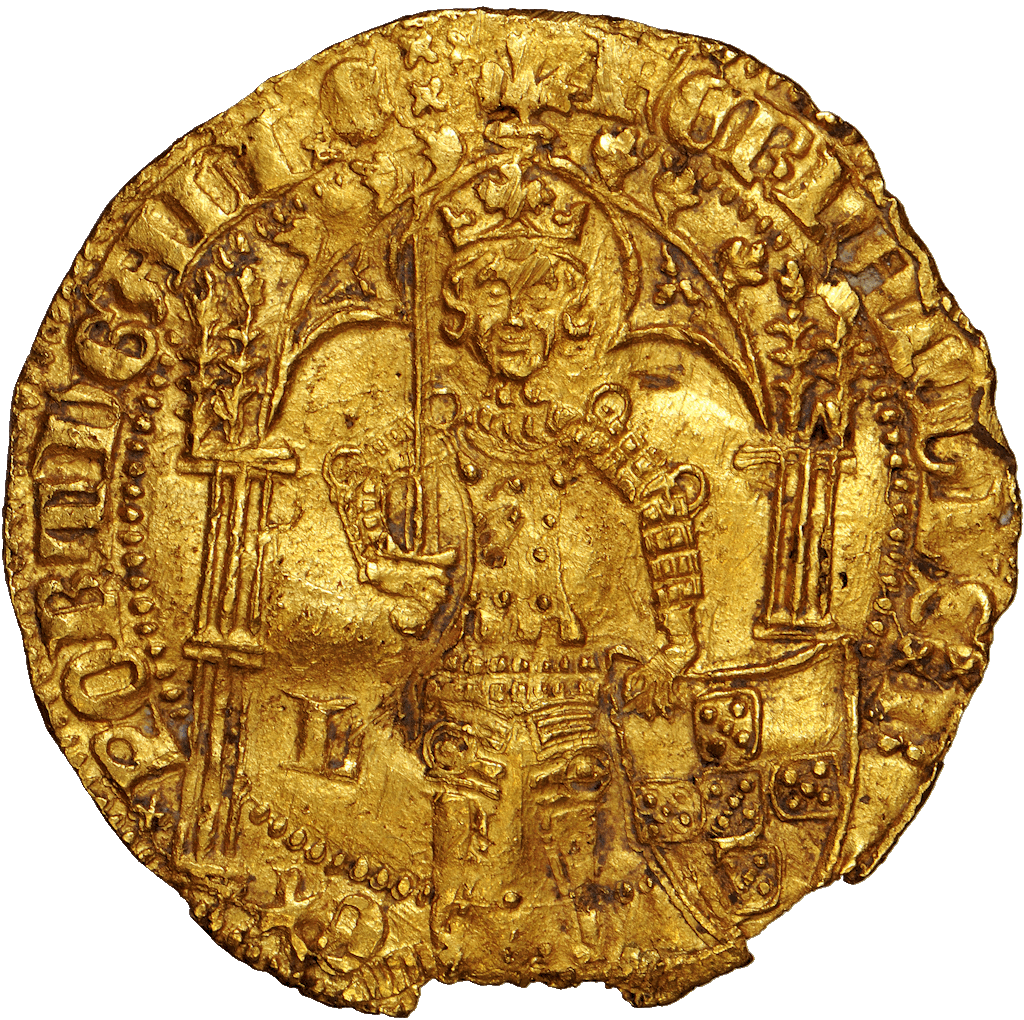
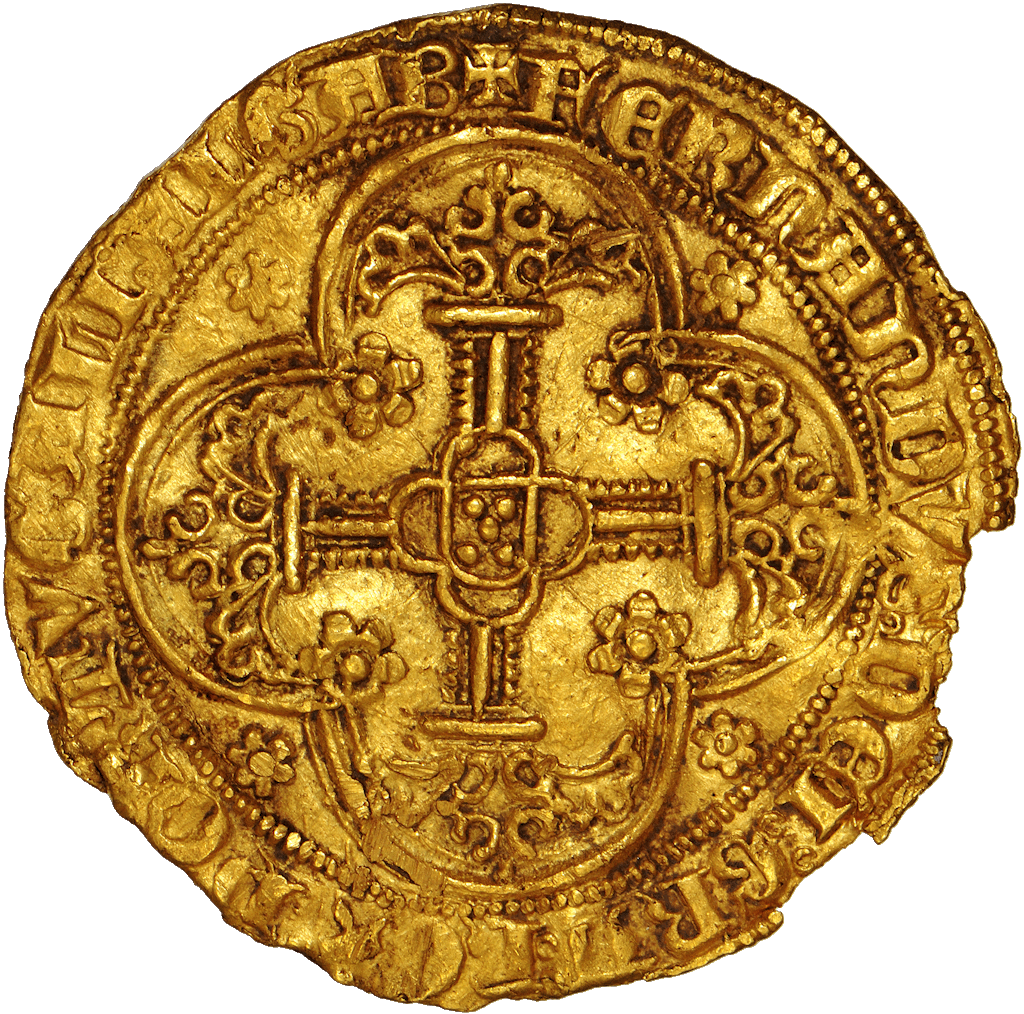
The death of the king, without descendants, paved the way for the regency of D. Leonor, supported by the king of Castile, and for the opposition of some sectors of society, which were organized around D. João, master of Avis: the dynastic crisis settled between 1383 and 1385. Despite this, it was during the reign of D. Fernando that there was a great diversification of the monetary species that circulated in Portuguese territory, a sign of an economy that sought to revitalize at all costs. The minting of the dobra pé-terra (the coin in the image) dates back to this time, in which the king, influenced by the French currency, is represented standing, crowned and armored, holding a sword in one hand and the shield with the coat of arms of the kingdom in the other, framed for a typically Gothic setting. On the other side there is an equilateral cross richly ornamented according to the Gothic style. The signs say “Fernando, by the grace of God, king of Portugal and the Algarves.”
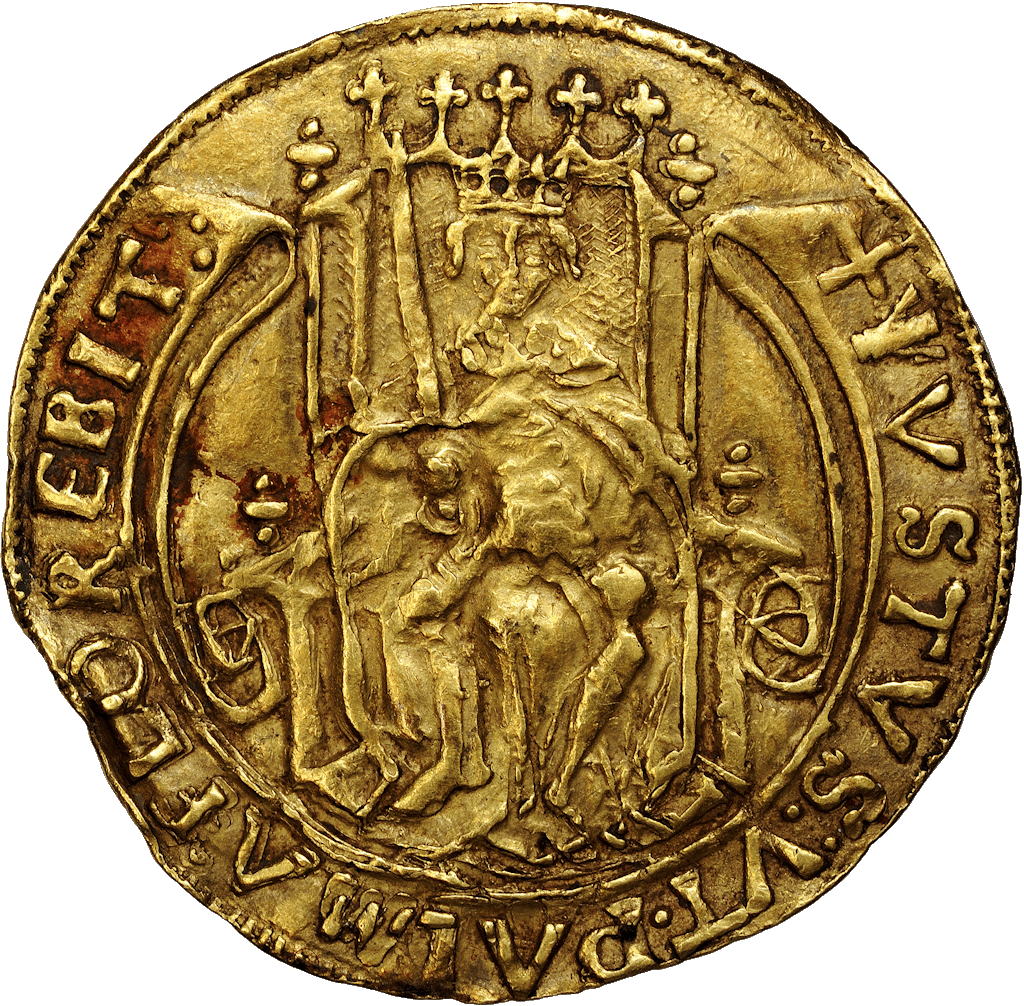
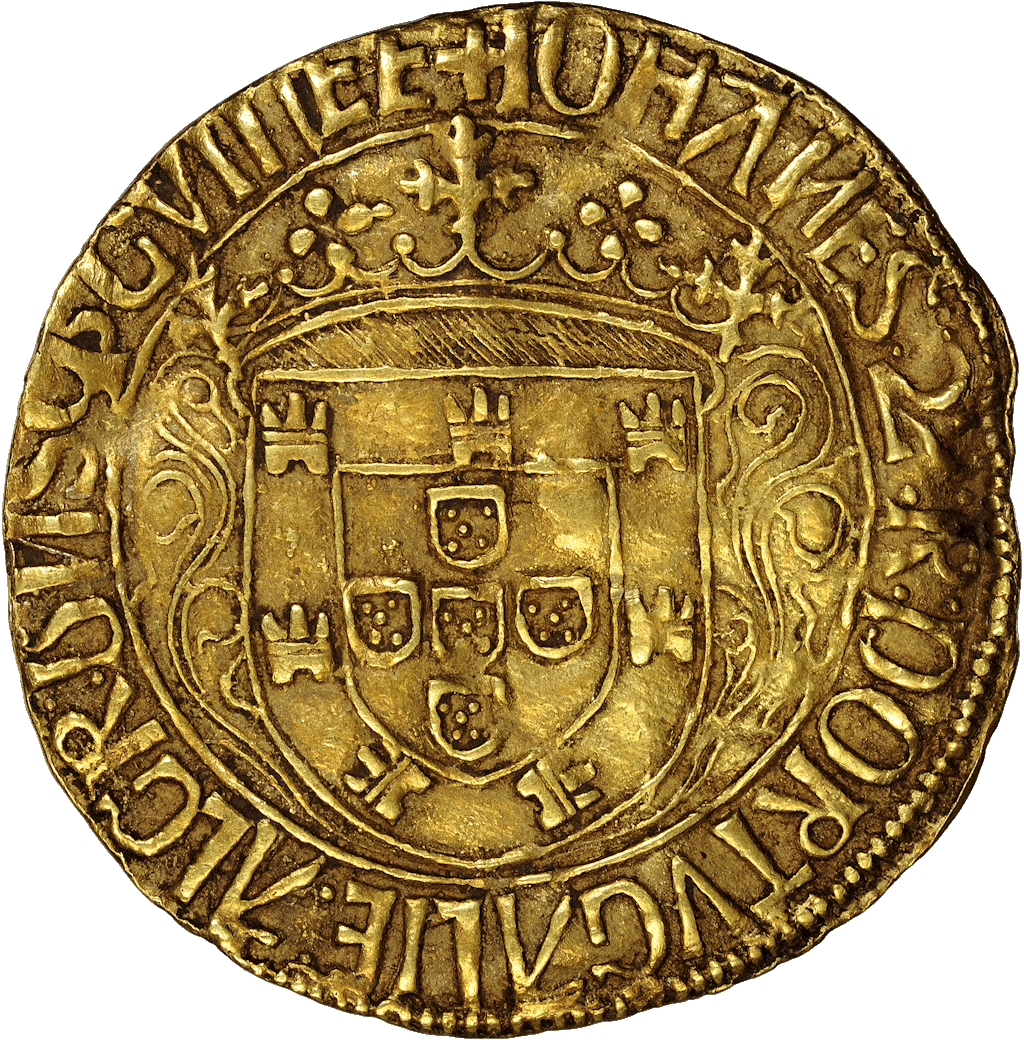
In the 15th century, the Portuguese crown took decisive steps in the exploration of African territory: continuing the action of the Infante D. Henrique, D. João II centralized in the crown the commerce of the Gulf of Guinea and the coast of Mina, at the same time that it encouraged the explorations that led to the discovery of the mouth of the Congo River by Diogo Cão, the crossing of Cabo da Boa Esperança by Bartolomeu Dias and the expeditions of Pêro da Covilhã and Afonso de Paiva to the land of Prester João. Another very important event was the signing of the Treaty of Tordesillas, with which the Iberian monarchs agreed the division of the world between Portugal and Spain, establishing the respective areas of jurisdiction.
This image of royal power is complemented by the presence of the coat of arms of the kingdom, a symbol of national sovereignty, consisting of a shield framed by volutes and formed by five shields placed on the cross, loaded with five beetles in quotation marks, surrounded by seven castles. The signs mention the salmic formula “The fair will flourish like the palm” and the title of the monarch, here designated “João II, king of Portugal and the Algarves, lord of Guinea.” The king's title includes the number “2”, very rare in the coins of this era.
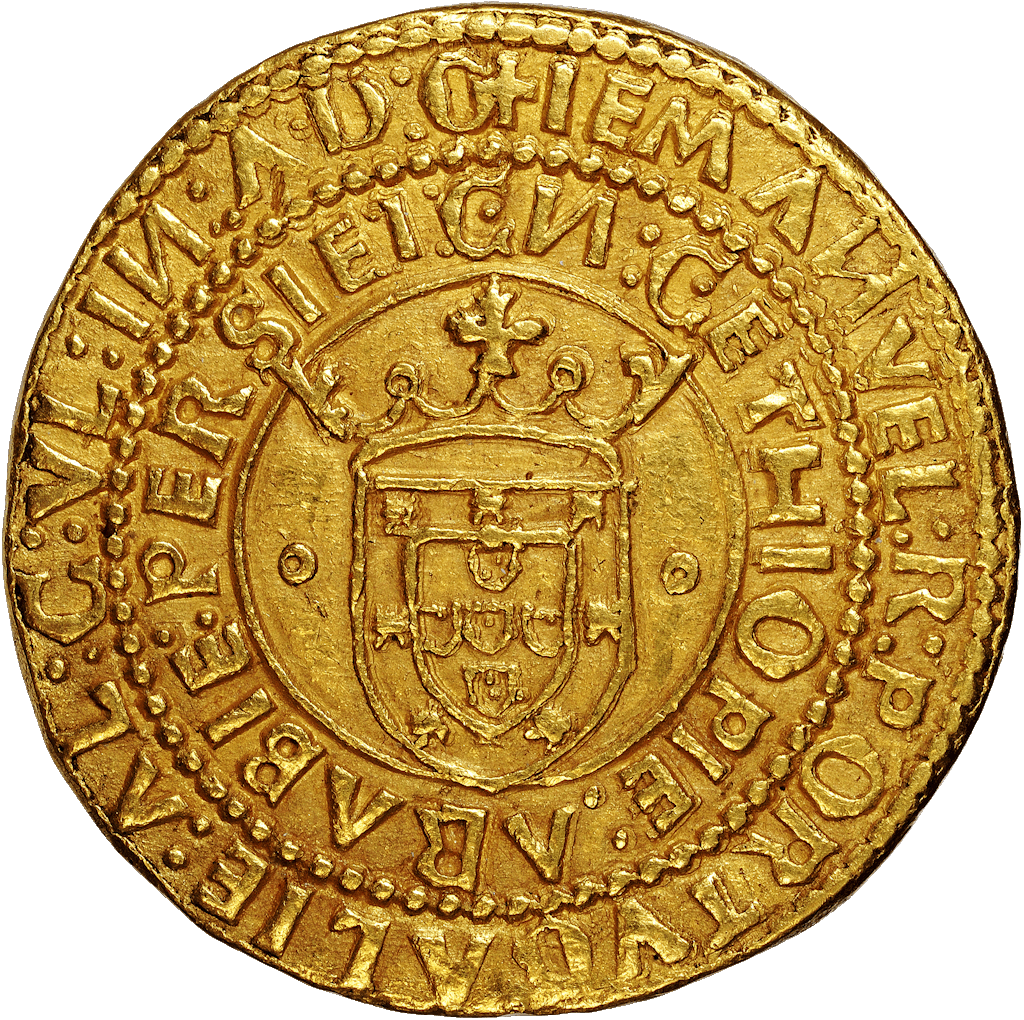
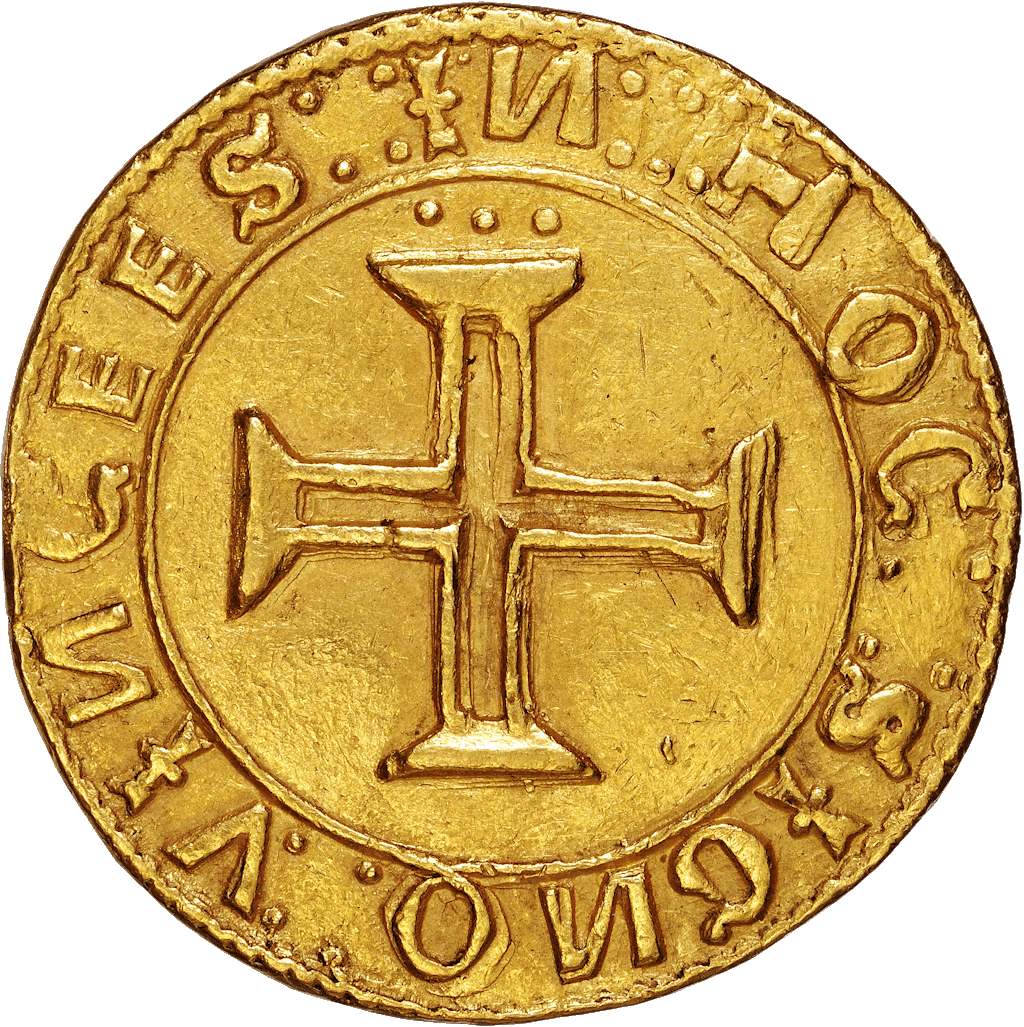
In the 16th century, Portugal lived a period of great economic prosperity, as a result of its integration in the transoceanic routes that, connecting Europe, Africa and Asia, circulated products as important as African gold or Asian spices. "D. Manuel I, king of Portugal and the Algarves, d'aquém and d'além-mar in Africa, lord of Guinea, of the conquest, navigation and trade of Ethiopia, Arabia, Persia and India” was the king who, with this impressive title , the most extensive used so far, was represented in the coin that symbolically marks this time - Portuguese.
Beaten in gold, this coin captures the essence of an imperial project linked to the epic of discoveries and expansion, of which the arrival of Vasco da Gama in India, the finding of Brazil by Pedro Álvares Cabral or the conquest of Goa by Afonso de Albuquerque there were three important moments. On one side, the coat of arms of the kingdom represents the idea of national sovereignty; in the other, the cross of the Order of Christ shows the role played by this religious order in maritime history. A highly prestigious currency, Portuguese was imitated in several cities in northern Europe and was even used, due to its evident symbolic and propagandistic charge, as a diplomatic instrument at the service of the royal court. His influence was so great that, in the 18th century, D. João V also sought to recover his production for the purposes of ceremonialization of royal power.
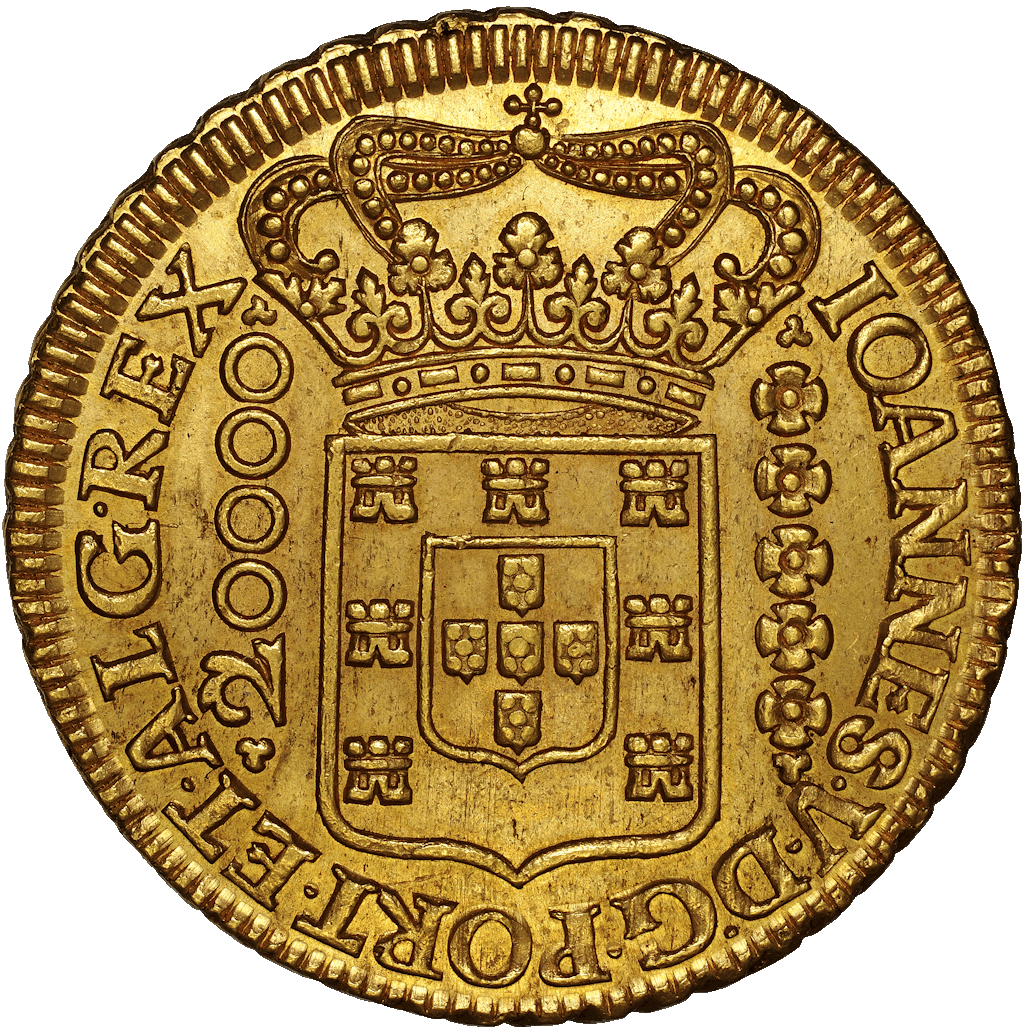
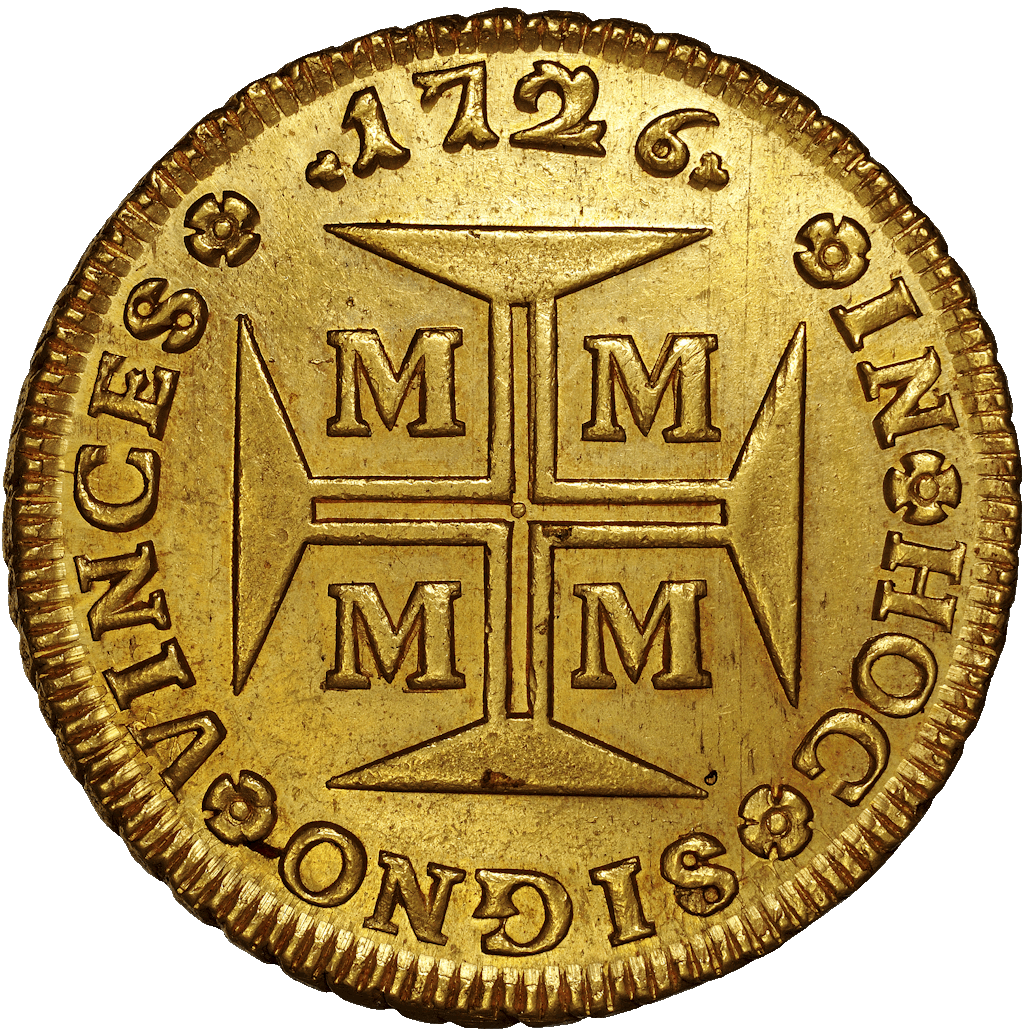
After King João IV's acclaim as king, an event that ended sixty years of Spanish rule, Portugal had to solve several problems related to his affirmation on the international political scene. The Restoration War, fought over more than twenty years, was marked by four important challenges: the recognition of Portugal's independence, the legitimation of the house of Bragança as reigning dynasty, the defense of territorial borders with Spain and the recovery of the colonies lost to the United Provinces of the Netherlands in Brazil. At this time, a new currency, the crusader, was also minted, with which the king sought to respond to the need to recover a weakened economy for years of a prolonged war.
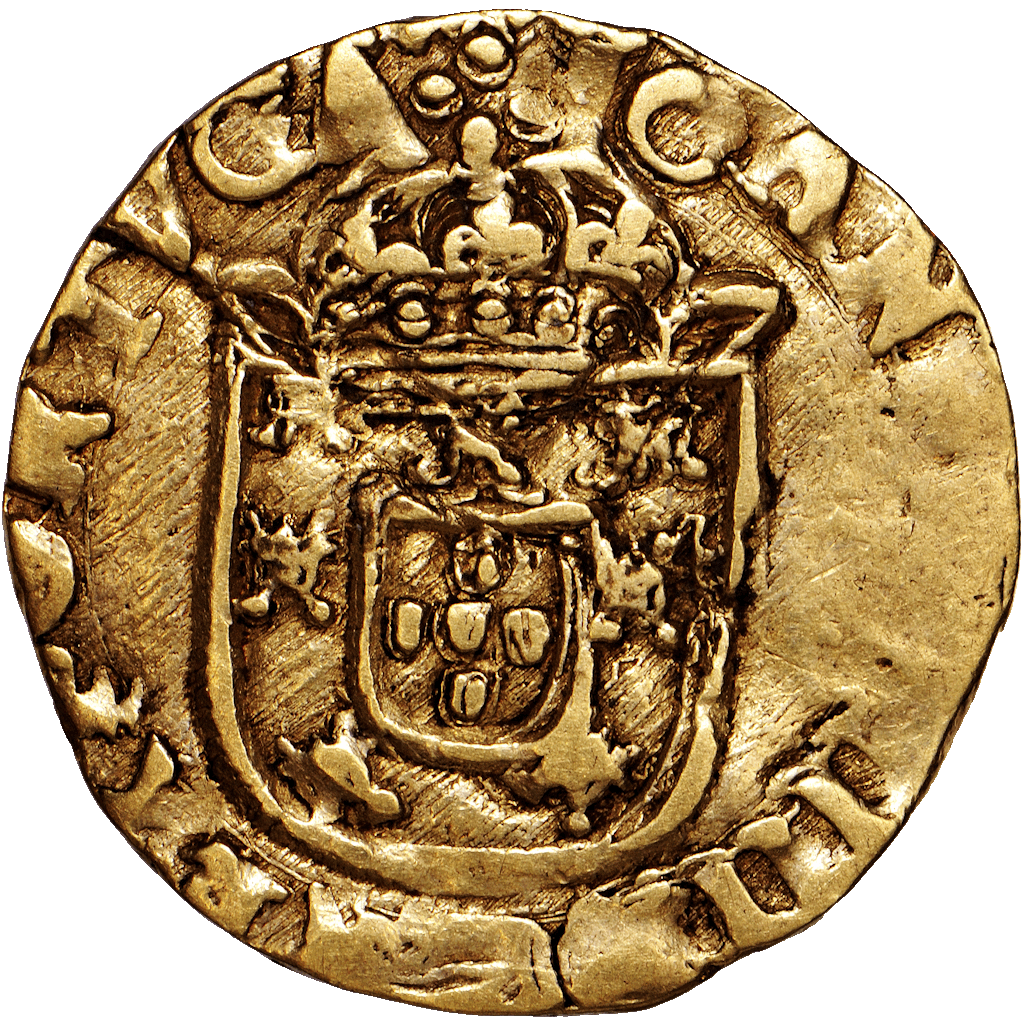
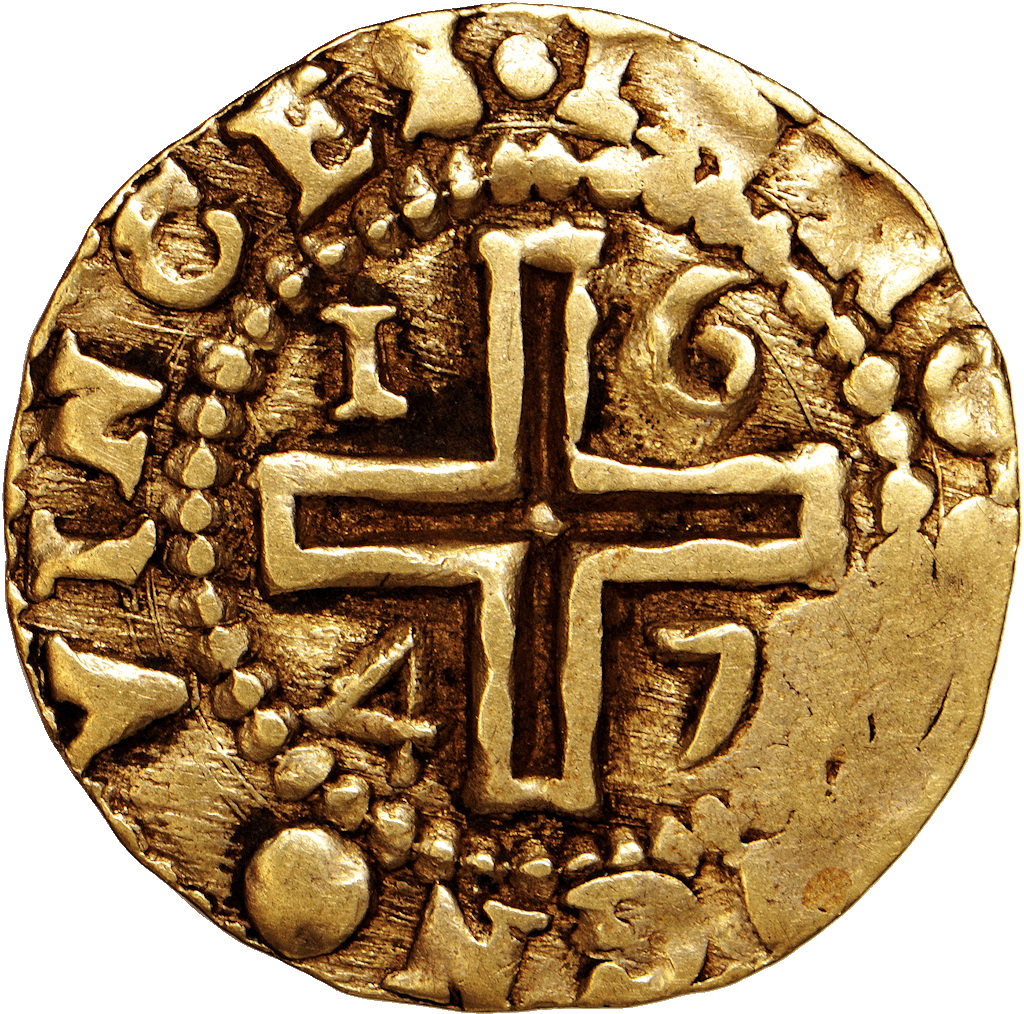
On the primary side of this coin, you can see the coat of arms of the kingdom, formed by a shield with five shields placed on a cross and bordered by seven castles, topped by a crown; on the secondary side, the cross with equilateral arms with a point in the center, also known as the cross of São Jorge, chanted by the coinage date: 1647. The cross evokes one of the oldest Portuguese devotions, linked to famous episodes in national history such as the conquest of Lisbon by D. Afonso Henriques, with the support of the English Crusaders, in 1147, or the delivery of the insignia allusive to the holy martyr to the combatants of the battle of Aljubarrota, including the constable Nun'Álvares Pereira, in 1385. In this coin, the signs correspond to the title of D. João IV, identified only as “king of Portugal”, and to the motto “In this sign you will win”, the most frequent formula in the coins that were minted by the kings of the house of Bragança until the implantation of the republic in Portugal.
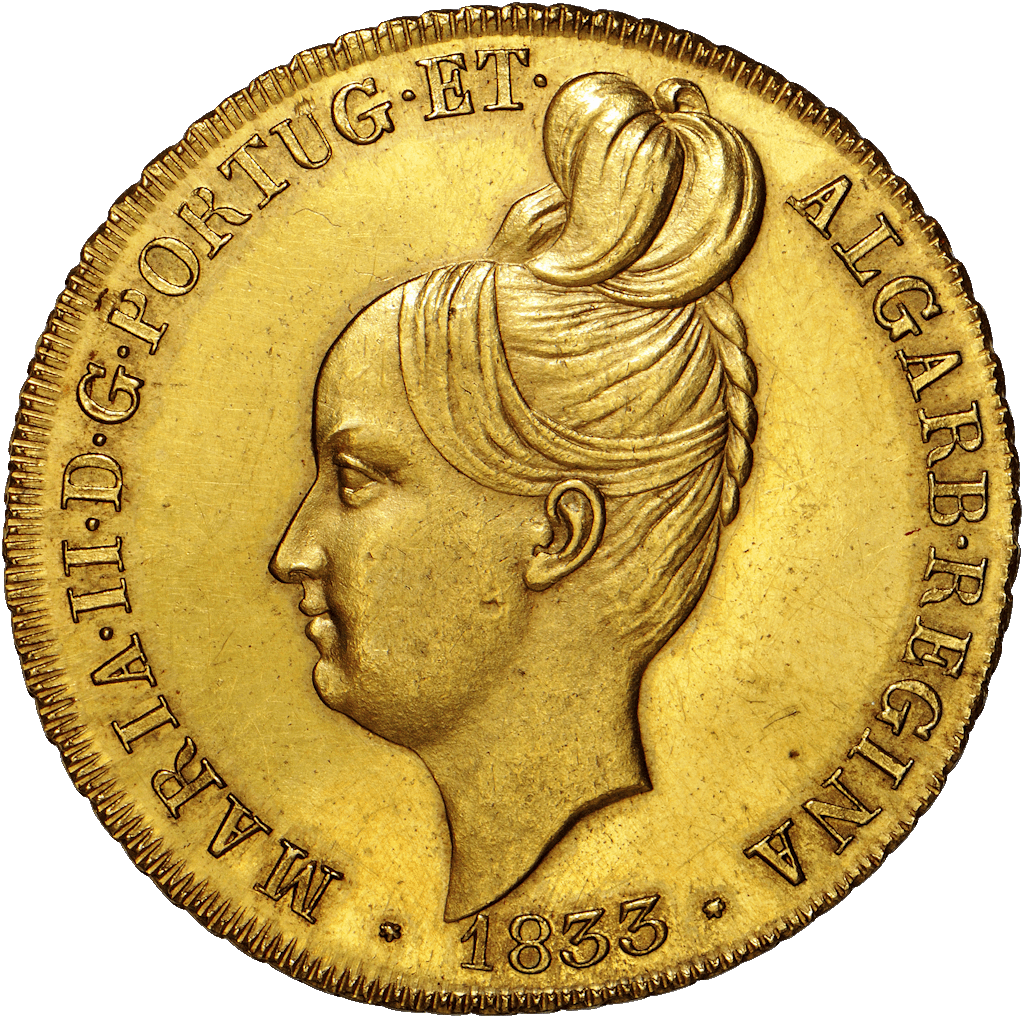
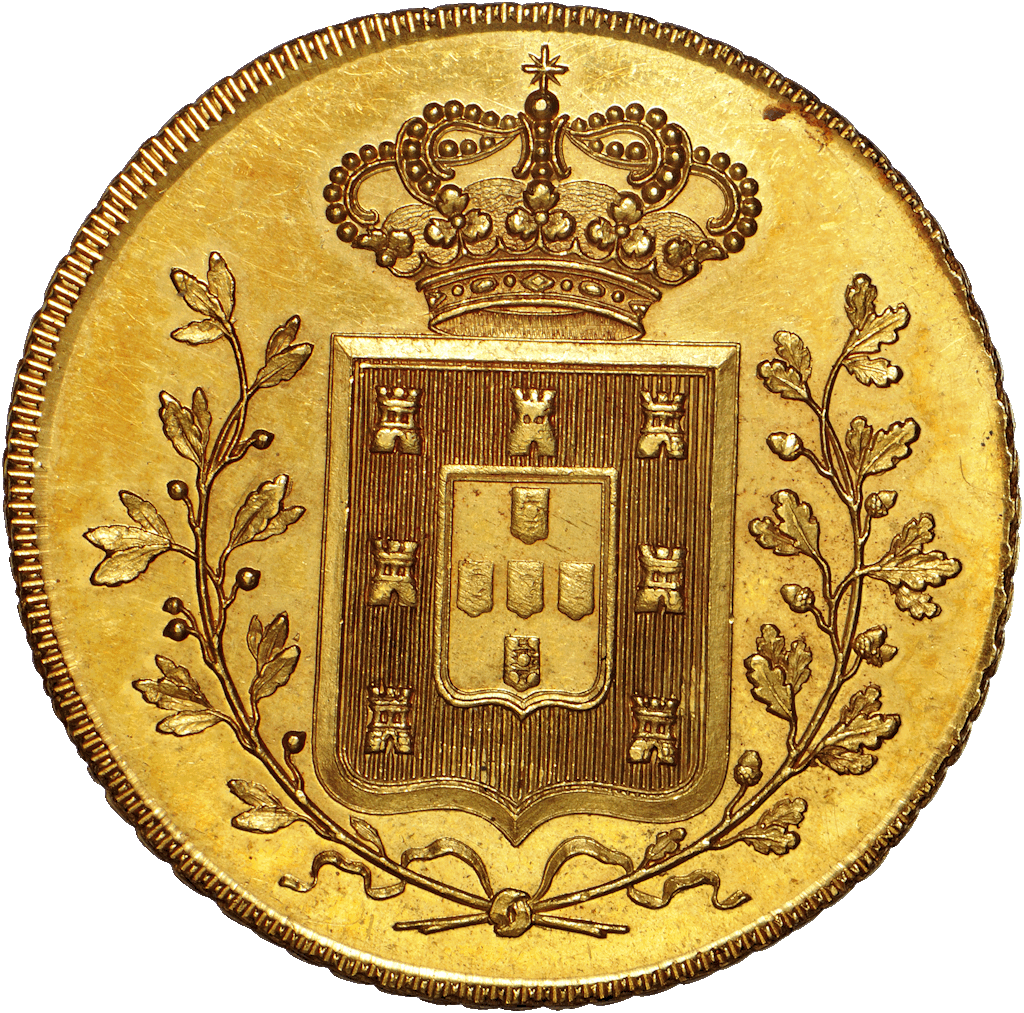
In the 19th century, Portugal was going through a very important period in its history, marked not only by the struggles between liberals and absolutists, represented respectively by D. Pedro IV and D. Miguel, but also by the enactment of the first constitutional legislation in the 19th century. Born in Brazil, D. Maria II ascended the throne after her father's abdication and even married her uncle, who had arrived in Lisbon from abroad, to swear allegiance to the constitutional charter. Throughout its reign, the country went through a serious economic and financial crisis, the result of the struggles that opposed the political groups with a chartist and vintista matrix.
Aware that the issue had to be resolved legally, D. Maria II tried to enact several diplomas in order to end the crisis, although without seeing great effects: in fact, her government was characterized by a series of revolutionary and counter-revolutionary coups that show the difficulties of the transition from absolutism to constitutionalism. With its effigy, this gold piece was also minted in 1833, also known as “beheaded” due to the unusual representation of the queen's head, without a bust. On one side, his face appears with features still young, with an elaborate hairstyle. On the other side, the coat of arms of the kingdom appears, with a typical 19th century configuration, framed by two intertwined branches. In addition to the date of the coinage, the signs identify the monarch as “Maria II, by the grace of God, queen of Portugal and the Algarves.” An emblematic piece of that time, the “degolada” (beheaded) is still very much appreciated by coin collectors today.
Gold • 4.56g
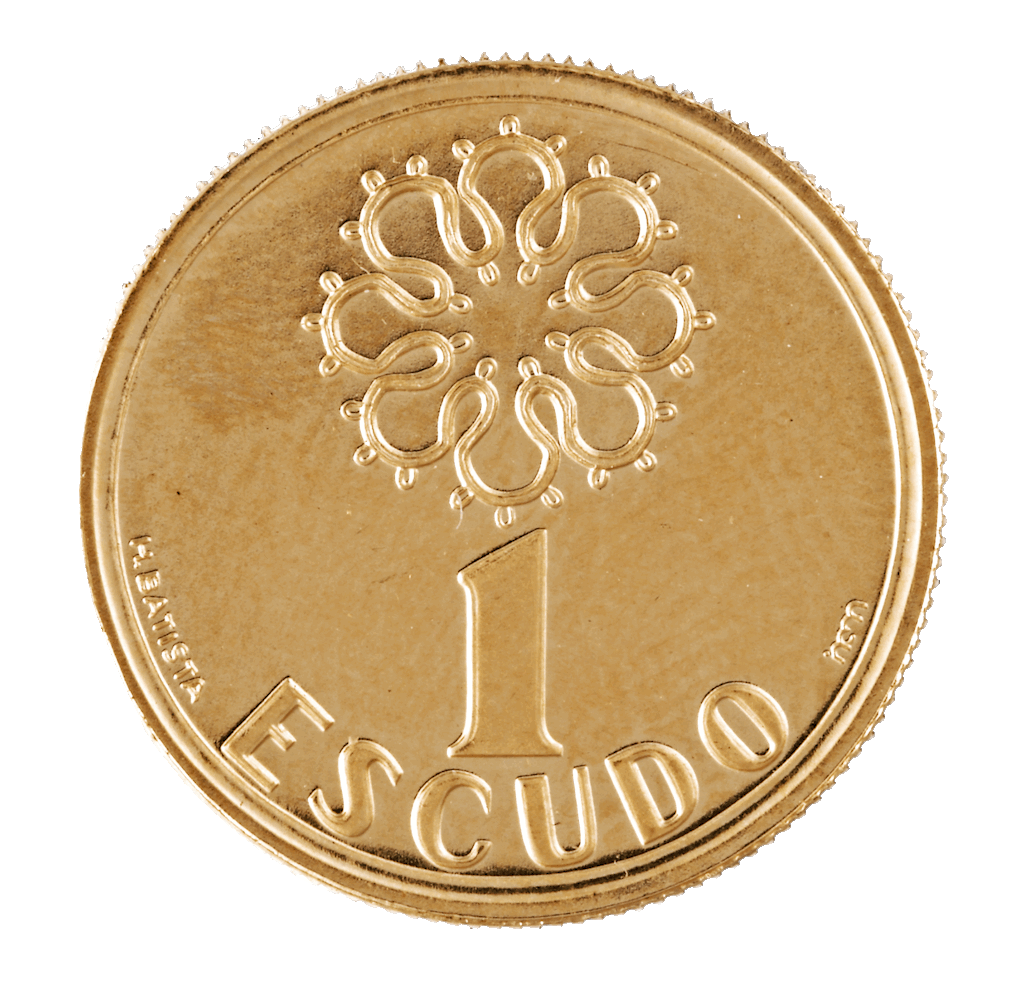
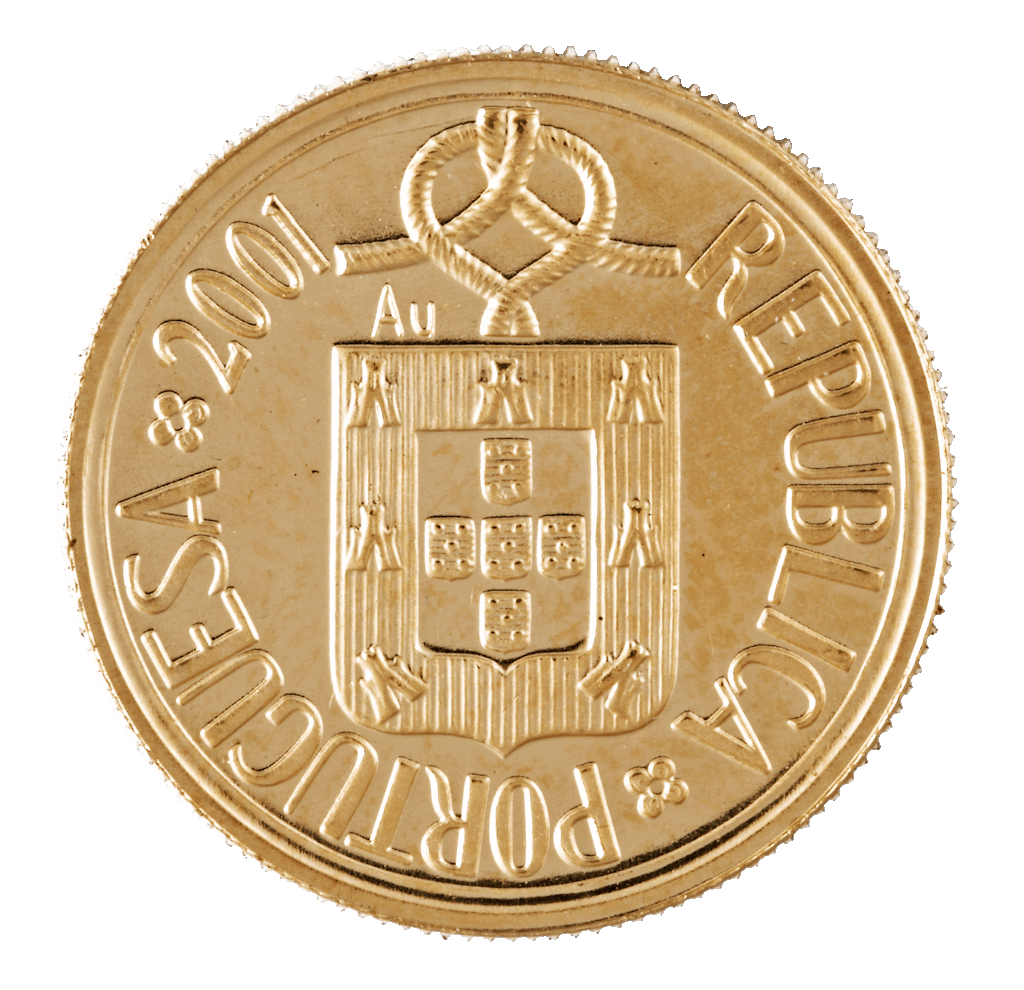
Produced to replace the currency of réis minted in the monarchical era, the escudo was the monetary species that circulated in Portugal between the beginning of the 20th century, when the republic was established, and the beginning of the 21st century, when the euro appeared. Throughout these hundred years of history, the escudo has known various themes and configurations, associated with the various periods in which contemporary history is divided: the First Republic, the Dictatorship (Estado Novo), Democracy.
The piece shown in the image, idealized by Helder Batista, corresponds to the last issue of gold escudo, before the euro came into circulation: on one side you can see the value and denomination; in the other, the coat of arms of the Portuguese Republic can be seen, formed by a escudo with five escudetes placed in a cross, loaded with five bezants in quotation marks and framed by the border of seven castles. In the place where the crown appeared on the coins of the monarchic era, a knot of rope now appears that evokes one of the most common motifs in Portuguese art from the Manueline period, closely linked to the theme of the sea and navigation. The signs identify the authority responsible for the issue and the date on which it occurred: 2001. Although its production was interrupted at this time, the currency continued to circulate for some years, until it was collected by order of the Bank of Portugal.
The creation of a single currency in the European space was a very important moment in the history of the European Union and its member countries, including Portugal. The production of this coin is a challenge for many artists and technicians who work daily in collaboration with the various European mints. In its denominations, the euro has a face common to all the countries of the Economic and Monetary Union and a specific national face for each country: Luc Luycx was the author of the drawing alluding to the map of the European Union with the twelve stars of the flag, and Vitor Santos, the author of the design alluding to the stamps of D. Afonso Henriques, with the corners and castles that form the coat of arms of the Republic.
In Portugal, the first euro coin, already in gold, was produced a year after the new currency entered circulation, marking a very important date in Portuguese philatelic history: the 150th anniversary of the issuance of the first stamp. This stamp was produced during the reign of D. Maria II, in 1853, and today it is a very coveted object by all philatelic collectors, due to its great rarity and historical value. In it, the queen was portrayed on the left, with a diadem on her head and hair tied in a delicate hairstyle, in the style of the 19th century elites. Above the queen's effigy, the word “Correio” (Post Office) can be read, an institution that was created in the early sixteenth century and that remains active today, fulfilling its mission of ensuring communication, logistics and financial products based on innovation and trust.